Moline Memories

Friday, May 29, 2026

From Rush Limbaugh's Father - "Our Lives, Our Fortunes, Our Sacred Honor


From Rush Limbaugh's Father - "Our Lives, Our Fortunes, Our Sacred Honor


RUSH INTRODUCTION: My father, Rush H. Limbaugh, Jr., delivered this oft-requested address locally a number of times, but it had never before appeared in print until it was published in The Limbaugh Letter. My dad was renowned for his oratory skills and for his original mind; this speech is, I think, a superb demonstration of both. I will always be grateful to him for instilling in me a passion for the ideas and lives of America's Founders, as well as a deep appreciation for the inspirational power of words, which you will see evidenced here:

"Our Lives, Our Fortunes, Our Sacred Honor"

It was a glorious morning. The sun was shining and the wind was from the Southeast. Up especially early, a tall bony, redheaded young Virginian found time to buy a new thermometer, for which he paid three pounds, fifteen shillings. He also bought gloves for Martha, his wife, who was ill at home.

Thomas Jefferson arrived early at the statehouse. The temperature was 72.5 degrees and the horseflies weren't nearly so bad at that hour. It was a lovely room, very large, with gleaming white walls. The chairs were comfortable. Facing the single door were two brass fireplaces, but they would not be used today.

The moment the door was shut, and it was always kept locked, the room became an oven. The tall windows were shut, so that loud quarreling voices could not be heard by passersby. Small openings atop the windows allowed a slight stir of air, and also a large number of horseflies. Jefferson records that "the horseflies were dexterous in finding necks, and the silk of stockings was nothing to them." All discussing was punctuated by the slap of hands on necks.

On the wall at the back, facing the president's desk, was a panoply -- consisting of a drum, swords, and banners seized from Fort Ticonderoga the previous year. Ethan Allen and Benedict Arnold had captured the place, shouting that they were taking it "in the name of the Great Jehovah and the Continental Congress!"

Now Congress got to work, promptly taking up an emergency measure about which there was discussion but no dissension. "Resolved: That an application be made to the Committee of Safety of Pennsylvania for a supply of flints for the troops at New York."

Then Congress transformed itself into a committee of the whole. The Declaration of Independence was read aloud once more, and debate resumed. Though Jefferson was the best writer of all of them, he had been somewhat verbose. Congress hacked the excess away. They did a good job, as a side-by-side comparison of the rough draft and the final text shows. They cut the phrase "by a self-assumed power." "Climb" was replaced by "must read," then "must" was eliminated, then the whole sentence, and soon the whole paragraph was cut. Jefferson groaned as they continued what he later called "their depredations." "Inherent and inalienable rights" came out "certain unalienable rights," and to this day no one knows who suggested the elegant change.

A total of 86 alterations were made. Almost 500 words were eliminated, leaving 1,337. At last, after three days of wrangling, the document was put to a vote.

Here in this hall Patrick Henry had once thundered: "I am no longer a Virginian, sir, but an American." But today the loud, sometimes bitter argument stilled, and without fanfare the vote was taken from north to south by colonies, as was the custom. On July 4, 1776, the Declaration of Independence was adopted.

There were no trumpets blown. No one stood on his chair and cheered. The afternoon was waning and Congress had no thought of delaying the full calendar of routine business on its hands. For several hours they worked on many other problems before adjourning for the day.

Much To Lose

What kind of men were the 56 signers who adopted the Declaration of Independence and who, by their signing, committed an act of treason against the crown? To each of you, the names Franklin, Adams, Hancock and Jefferson are almost as familiar as household words. Most of us, however, know nothing of the other signers. Who were they? What happened to them?

I imagine that many of you are somewhat surprised at the names not there: George Washington, Alexander Hamilton, Patrick Henry. All were elsewhere.

Ben Franklin was the only really old man. Eighteen were under 40; three were in their 20s. Of the 56 almost half - 24 - were judges and lawyers. Eleven were merchants, nine were landowners and farmers, and the remaining 12 were doctors, ministers, and politicians.

With only a few exceptions, such as Samuel Adams of Massachusetts, these were men of substantial property. All but two had families. The vast majority were men of education and standing in their communities. They had economic security as few men had in the 18th Century.

Each had more to lose from revolution than he had to gain by it. John Hancock, one of the richest men in America, already had a price of 500 pounds on his head. He signed in enormous letters so that his Majesty could now read his name without glasses and could now double the reward. Ben Franklin wryly noted: "Indeed we must all hang together, otherwise we shall most assuredly hang separately."

Fat Benjamin Harrison of Virginia told tiny Elbridge Gerry of Massachusetts: "With me it will all be over in a minute, but you, you will be dancing on air an hour after I am gone."

These men knew what they risked. The penalty for treason was death by hanging. And remember, a great British fleet was already at anchor in New York Harbor.

They were sober men. There were no dreamy-eyed intellectuals or draft card burners here. They were far from hot-eyed fanatics yammering for an explosion. They simply asked for the status quo. It was change they resisted. It was equality with the mother country they desired. It was taxation with representation they sought. They were all conservatives, yet they rebelled.

It was principle, not property, that had brought these men to Philadelphia. Two of them became presidents of the United States. Seven of them became state governors. One died in office as vice president of the United States. Several would go on to be US Senators. One, the richest man in America, in 1828 founded the Baltimore and Ohio Railroad. One, a delegate from Philadelphia, was the only real poet, musician and philosopher of the signers. (It was he, Francis Hopkinson not Betsy Ross who designed the United States flag.)

Richard Henry Lee, a delegate from Virginia, had introduced the resolution to adopt the Declaration of Independence in June of 1776. He was prophetic in his concluding remarks: "Why then sir, why do we longer delay? Why still deliberate? Let this happy day give birth to an American Republic. Let her arise not to devastate and to conquer but to reestablish the reign of peace and law.

"The eyes of Europe are fixed upon us. She demands of us a living example of freedom that may exhibit a contrast in the felicity of the citizen to the ever-increasing tyranny which desolates her polluted shores. She invites us to prepare an asylum where the unhappy may find solace, and the persecuted repost.

"If we are not this day wanting in our duty, the names of the American Legislatures of 1776 will be placed by posterity at the side of all of those whose memory has been and ever will be dear to virtuous men and good citizens."

Though the resolution was formally adopted July 4, it was not until July 8 that two of the states authorized their delegates to sign, and it was not until August 2 that the signers met at Philadelphia to actually put their names to the Declaration.

William Ellery, delegate from Rhode Island, was curious to see the signers' faces as they committed this supreme act of personal courage. He saw some men sign quickly, "but in no face was he able to discern real fear." Stephan Hopkins, Ellery's colleague from Rhode Island, was a man past 60. As he signed with a shaking pen, he declared: "My hand trembles, but my heart does not."


"Most Glorious Service"

Even before the list was published, the British marked down every member of Congress suspected of having put his name to treason. All of them became the objects of vicious manhunts. Some were taken. Some, like Jefferson, had narrow escapes. All who had property or families near British strongholds suffered.

  • Francis Lewis, New York delegate saw his home plundered -- and his estates in what is now Harlem -- completely destroyed by British Soldiers. Mrs. Lewis was captured and treated with great brutality. Though she was later exchanged for two British prisoners through the efforts of Congress, she died from the effects of her abuse.
  • William Floyd, another New York delegate, was able to escape with his wife and children across Long Island Sound to Connecticut, where they lived as refugees without income for seven years. When they came home they found a devastated ruin.
  • Philips Livingstone had all his great holdings in New York confiscated and his family driven out of their home. Livingstone died in 1778 still working in Congress for the cause.
  • Louis Morris, the fourth New York delegate, saw all his timber, crops, and livestock taken. For seven years he was barred from his home and family.
  • John Hart of Trenton, New Jersey, risked his life to return home to see his dying wife. Hessian soldiers rode after him, and he escaped in the woods. While his wife lay on her deathbed, the soldiers ruined his farm and wrecked his homestead. Hart, 65, slept in caves and woods as he was hunted across the countryside. When at long last, emaciated by hardship, he was able to sneak home, he found his wife had already been buried, and his 13 children taken away. He never saw them again. He died a broken man in 1779, without ever finding his family.
  • Dr. John Witherspoon, signer, was president of the College of New Jersey, later called Princeton. The British occupied the town of Princeton, and billeted troops in the college. They trampled and burned the finest college library in the country.
  • Judge Richard Stockton, another New Jersey delegate signer, had rushed back to his estate in an effort to evacuate his wife and children. The family found refuge with friends, but a Tory sympathizer betrayed them. Judge Stockton was pulled from bed in the night and brutally beaten by the arresting soldiers. Thrown into a common jail, he was deliberately starved. Congress finally arranged for Stockton's parole, but his health was ruined. The judge was released as an invalid, when he could no longer harm the British cause.He returned home to find his estate looted and did not live to see the triumph of the Revolution. His family was forced to live off charity.
  • Robert Morris, merchant prince of Philadelphia, delegate and signer, met Washington's appeals and pleas for money year after year. He made and raised arms and provisions which made it possible for Washington to cross the Delaware at Trenton. In the process he lost 150 ships at sea, bleeding his own fortune and credit almost dry.
  • George Clymer, Pennsylvania signer, escaped with his family from their home, but their property was completely destroyed by the British in the Germantown and Brandywine campaigns.
  • Dr. Benjamin Rush, also from Pennsylvania, was forced to flee to Maryland. As a heroic surgeon with the army, Rush had several narrow escapes.
  • John Martin, a Tory in his views previous to the debate, lived in a strongly loyalist area of Pennsylvania. When he came out for independence, most of his neighbors and even some of his relatives ostracized him. He was a sensitive and troubled man, and many believed this action killed him. When he died in 1777, his last words to his tormentors were: "Tell them that they will live to see the hour when they shall acknowledge it [the signing] to have been the most glorious service that I have ever rendered to my country."
  • William Ellery, Rhode Island delegate, saw his property and home burned to the ground.
  • Thomas Lynch, Jr., South Carolina delegate, had his health broken from privation and exposures while serving as a company commander in the military. His doctors ordered him to seek a cure in the West Indies and on the voyage, he and his young bride were drowned at sea.
  • Edward Rutledge, Arthur Middleton, and Thomas Heyward, Jr., the other three South Carolina signers, were taken by the British in the siege of Charleston. They were carried as prisoners of war to St. Augustine, Florida, where they were singled out for indignities. They were exchanged at the end of the war, the British in the meantime having completely devastated their large landholdings and estates.
  • Thomas Nelson, signer of Virginia, was at the front in command of the Virginia military forces. With British General Charles Cornwallis in Yorktown, fire from 70 heavy American guns began to destroy Yorktown piece by piece. Lord Cornwallis and his staff moved their headquarters into Nelson's palatial home. While American cannonballs were making a shambles of the town, the house of Governor Nelson remained untouched. Nelson turned in rage to the American gunners and asked, "Why do you spare my home?"They replied, "Sir, out of respect to you." Nelson cried, "Give me the cannon!" and fired on his magnificent home himself, smashing it to bits. But Nelson's sacrifice was not quite over. He had raised $2 million for the Revolutionary cause by pledging his own estates. When the loans came due, a newer peacetime Congress refused to honor them, and Nelson's property was forfeited. He was never reimbursed. He died, impoverished, a few years later at the age of 50.

Lives, Fortunes, Honor

Of those 56 who signed the Declaration of Independence, nine died of wounds or hardships during the war. Five were captured and imprisoned, in each case with brutal treatment. Several lost wives, sons or entire families. One lost his 13 children. Two wives were brutally treated. All were at one time or another the victims of manhunts and driven from their homes. Twelve signers had their homes completely burned. Seventeen lost everything they owned. Yet not one defected or went back on his pledged word. Their honor, and the nation they sacrificed so much to create is still intact.

And, finally, there is the New Jersey signer, Abraham Clark.

He gave two sons to the officer corps in the Revolutionary Army. They were captured and sent to that infamous British prison hulk afloat in New York Harbor known as the hell ship Jersey, where 11,000 American captives were to die. The younger Clarks were treated with a special brutality because of their father. One was put in solitary and given no food. With the end almost in sight, with the war almost won, no one could have blamed Abraham Clark for acceding to the British request when they offered him his sons' lives if he would recant and come out for the King and Parliament. The utter despair in this man's heart, the anguish in his very soul, must reach out to each one of us down through 200 years with his answer: "No."

The 56 signers of the Declaration Of Independence proved by their every deed that they made no idle boast when they composed the most magnificent curtain line in history. "And for the support of this Declaration with a firm reliance on the protection of divine providence, we mutually pledge to each other our lives, our fortunes, and our sacred honor."


RUSH EPILOGUE: My friends, I know you have a copy of the Declaration of Independence somewhere around the house - in an old history book (newer ones may well omit it), an encyclopedia, or one of those artificially aged "parchments" we all got in school years ago. I suggest that each of you take the time this month to read through the text of the Declaration, one of the most noble and beautiful political documents in human history.

There is no more profound sentence than this: "We hold these truths to be self-evident, that all men are created equal, that they are endowed by their Creator with certain unalienable rights, that among these are Life, Liberty, and the pursuit of Happiness..."

These are far more than mere poetic words. The underlying ideas that infuse every sentence of this treatise have sustained this nation for more than two centuries. They were forged in the crucible of great sacrifice. They are living words that spring from and satisfy the deepest cries for liberty in the human spirit.

"Sacred honor" isn't a phrase we use much these days, but every American life is touched by the bounty of this, the Founders' legacy. It is freedom, tested by blood, and watered with tears.


Wednesday, May 27, 2026

Flour Power - The Robin Hood Explosion


Flour Power - The Robin Hood Explosion


Living Memory History: The Robin Hood Flour Mill Explosion - Primary Selections from Special Collections:


Living Memory History: The Robin Hood Flour Mill Explosion
Comments (7) Filed under: Local History
Tags: Disasters, Fires, International Multifoods, Local History
History is full of landmark events—world, national, local— which bring people together to compare notes:

Did you see it?  Did you hear it? What were you doing?  Were you there?

Those in downtown Davenport experienced their own landmark event around noon on May 23, 1975, when a massive explosion on the riverfront shook the city.

Doors flew open from the percussion and windows shattered, throwing jagged spears of glass to the sidewalks.  People ran outside to find out what had happened—most thought it was an earthquake, some thought it was a bomb.  Others worried that the Rock Island Arsenal was the source of the blast.

Sirens filled the air and a helicopter flew in and stopped near the Mississippi River.  The curious ran in that direction or headed for high vantage points—the upper floors of the Blackhawk Hotel or the Kahl Building—to get a better view of East River Drive.

And what a view there was.

Half of the International Multifoods complex seemed to have lifted up and collapsed onto the other half.  The large profile of Robin Hood on one of the riverside buildings—which had given the place its local nickname, the “Robin Hood Flour Mill”—appeared to have launched itself into the Mississippi.  Pieces of reinforced concrete had been thrown at least a hundred feet in every direction.  A grain barge near the edge of the river had sunk under the debris.

After


But what could have caused such destruction?

Such a simple thing:  a spark had ignited the dust inside a grain silo—one of the big ones, with a capacity of 1.8 million pounds of wheat —which had exploded with devastating force.

Seven people were trapped on the remaining roofs of the complex and the firefighter’s ladders couldn’t reach two of them—one in an area that was at risk for a second explosion.  A military helicopter came to assist.   Five ambulances, plus one from Arsenal Island, took the seriously injured away to the disaster stations, where all area doctors had been told to report.  Five employees were in critical condition and were later moved to burn centers.

One body had already been found in the wreckage:  Ferrell Cleeton of Davenport. By the time the Quad-City Times came out that evening, his was the only confirmed death, though three people were still reported missing.  It was thought that one man had been blown into the river.

By May 26, cranes were clearing the rubble and an auger was expected to soon clear the still-smoldering grain from the bottom of the silo.  Only one worker was still unaccounted for:  Leon Robinson of Milan, Illinois—the man who had been seen in a control tower on the levee barely a minute before the blast.  His fellow workers protested the machinery, wanting to hand-search the wreckage in case their friend was still alive.

But time was passing, and the next day, a barge from the U.S. Corps of Engineers carried a crane from LeClaire to help lift debris from the sunken barge.  On May 29, the bucket of the crane pulled Mr. Robinson’s body from where it had been trapped underneath the wreckage.  The Scott County medical examiner reported that he had died before he and his tower had hit the water, though this was scant consolation for his family and friends.

Total damages to the complex were estimated to be three to five million dollars.  Although a new grain elevator would take almost a year to build, flour mill operations resumed the week after the disaster, as that part of the complex had been the least damaged.   The plant was able to keep a large number of its employees occupied with cleaning and salvaging work—over 400,000 bushels of grain needed to be removed from the undamaged silos.  Soon, the only evidence of the disaster was the absence of the familiar logo, which was not replaced.

So, where were you when Robin Hood Flour blew up?


Views of International Multifoods several years before the explosion.  The barges were tied to the levy for loading.

____

Sources:

“Explosion at Mill!” Quad-City Times, May 23, 1975, p.1

McGrevey, Michael.  “‘No Dust Peril at Mill.’”  Quad-City Times, May 27, 1975, p.1.

McGrevey, Michael.  “Part of Workforce Back on Job at Mill.”  Quad-City Times, May 30, 1975, p.17.

McGrevey, Michael.  “Relatives Keep Riverside Vigil.”  Quad-City Times, May 29,1975, p.1.

Vogel, David M.  “Cranes Clear Wreckage at Mill.”  Quad-City Times, May 26, 1975, p.1.

Wundram, Bill.  “‘Thought it was an Earthquake.’”  Quad-City Times, May 23, 1975, p. 14.

(Posted by Sarah)

7 RESPONSES TO “LIVING MEMORY HISTORY: THE ROBIN HOOD FLOUR MILL EXPLOSION”
9:12am, 25 May, 2010 р.
Amy D. says:
I remember being taken to see the buildings after the explosion. Probably one of my earliest memories. My dad, by chance, saw it happen while standing in an Arsenal parking lot after a lunch meeting.

10:39am, 25 May, 2010 р.
Kay says:
I was working in downtown Davenport and the building shook. My sister worked for another grain company in the area, but knew some of the people who were injured and died.

8:16pm, 5 July, 2010 р.
Nancy says:
I was working for Mast-Keystone in East Village. I was sitting on table in front of a window when the table and window shook.

5:36pm, 23 June, 2011 р.
Bob Shear says:
I was playing “foosball” in a bar & grill across the street from the mill when it exploded. We heard a boom and then the sound of concrete raining outside in the parking lot. A lot of damage to parked cars in the adjacent Eagle Signal lot. It was definitely one of those experiences you never forget.

3:26pm, 31 August, 2011 р.
Alan Booker says:
Not only my first visit to Davenport but, my first day in the USA. On hearing the explosion, the hotel staff told me it was a firing exercise at the arsenal. “Cool”, I thought, grabbed an Arsenal tour brochure and set off.
As I passed the smoking ruin of the mill, I realized that this appeared to be a real disaster and my interest in the arsenal suddenly evaporated. I had been hoping to see big guns being tested but suddenly, I was faced with the reality that people must have died in that tragic blast. A very sobering introduction to a country I have come to adore.
OK. It’s not so much the country as the fabulous QC friendships that have endured since that time.
I live in a nice English market town but, given the choice, erm, well I don’t have a green card so I don’t actually have that choice, so I guess I have to stay over here.

3:39pm, 30 October, 2011 р.
Jo says:
I was home from school for lunch (in Bettendorf). We were used to the arsenal testing howitzers. Our house had so many cracks in the plaster that we gave up patching them. This explosion was different in a couple of ways.

First, it was louder and much more intense that the guns, even though they were closer to us. Second, when we found out what had blown up, my whole family breathed a HUGE sigh of relief. It hadn’t been that long before that my dad was working on the roof of the bins, sealing them again the elements. We knew there was a risk to his working so high up, but we weren’t aware that he could have been blown to kingdom come at any moment. As Mom used to say, thank goodness for small favors!

10:40am, 5 March, 2012 р.
Wendy says:
I was gazing out the window of my biology class at Central High School, towards the plant when the explosion occured. I saw a huge flash of light immediately followed by a billowing cloud of black smoke. I heard constant sirens and helicopters after that. I heard when I got home from school that it was the Robin Hood flour plant.

Monday, September 1, 2014, Off to the Flood - 1965


Monday, September 1, 2014

Off to the Flood - 1965


Check out today's Moline Dispatch!!! Page B3. Great shot titled "Flood of 1965." A bunch of fellows catching a ride from the Moline Water Works. You can clearly see John Delarosa, Don, Ackley, Jim Haney, Gary Allen, John Danner,Maybe Tim Cook, Duddly Blunt and Guy Dyer. There's a few I don't recognize. What a great photo!

Thank you Guy Johnson, for finding and posting this.

Gary Allen sees - Gary Allen I see...... Larry DeClerck, Malcolm Tribble,(hidden behind Larry),Bill Sheets, Bill Briesch, Jerry Gerard, ??(squeezed in the middle) Tom Westcott, ???, Jim Haney, Greg White, Don Ackley, Dave Rowell, and Gary Allen.

Tuesday, May 26, 2026

Monday, August 25, 2014 Rest in Peace - Harriet Paschall - Dr. Ron Paschall's Wife - Ann Paschall's Mother


Monday, August 25, 2014

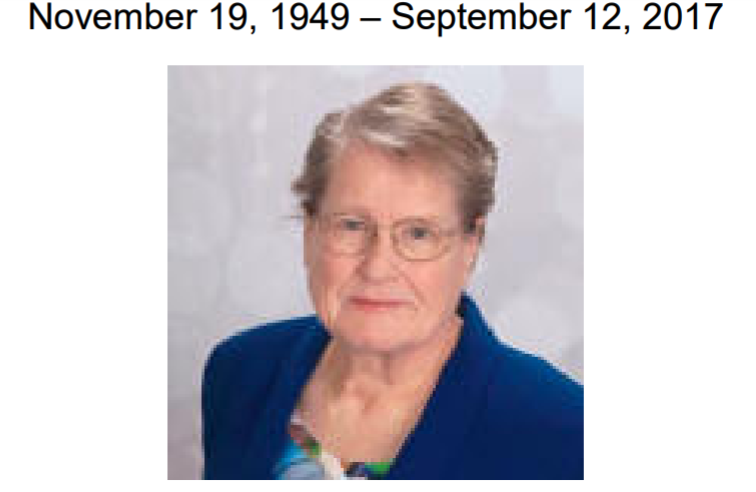
Rest in Peace - Harriet Paschall - Dr. Ron Paschall's Wife - Ann Paschall's Mother

Harriet Paschall, mother of Ann (MHS66) and Sara,
widow of Dr. Ron Paschall, died at the age of 95.
Her funeral will be at Wendt Funeral Home.

MOLINE — Harriett B. Paschall, 95, of Moline, passed away Sunday, Aug. 24, 2014, at Heartland Health Care Center in Moline.
Visitation will be 4-7 p.m. Thursday, Aug. 28, at Wendt Funeral Home in Moline. Services will be 10 a.m. Friday, Aug. 29, at First Congregation Church, 2201 7th Ave., Moline. Burial will be in Rock Island Memorial Park.
Harriett was born in Chicago on Sept. 15, 1918, to William B. and Ellen (Davies) Brown. On Aug. 28, 1943, in Moline, she married Ronald Rex Paschall, who preceded her in death Feb. 22, 2006. She attended Garfield Elementary School, John Deere Junior High, Moline High School, Augustana College (graduate), and the University of Iowa, completing one year toward a master’s program.
She was a member of First Congregational Church congregators, which she and her husband helped to originate, and she was head of the funeral committee for many years. She was also a member of The Alice Kennedy Circle of King’s Daughters for more than 60 years and was a Brownie and Girl Scout leader. She and her husband traveled extensively to Europe, England, New Zealand and Australia. They also traveled to Japan, Russia and Poland on People to People Tours. Her favorite place on earth was Grand Cayman, where her entire family would vacation. Her other passions were family, friends, baking and SHOPPING.
One of the highlights of Harriett's and Ron’s life was traveling to Bolivia to provide dental care to the natives. This resulted in bringing three Bolivian children to the University of Iowa Medical Center to receive special care. Eventually the youngest child was adopted by wonderful friends and became an American citizen.
Survivors include daughters, Sara (Ron) Olson of Holmen, Wis., and Ann (Dan) Halsted of Pine, Colo.; grandchildren:, Paige (Travis) Brush and R.L. (Amy) Olson II; and great-grandchildren, Megan (Aaron) Kopp, Abby Brush, Hunter Brush and Aidan Olson.
In addition to her husband and parents, she was preceded in death by her brother, Tom Brown; and two sisters, Marion Sorg and Betsy Blakley.
Memorials may be made to First Congregational Church of Moline, St. Jude Children’s Hospital or a charity of your choice.
Online condolences may be sent at www.wendtfuneralhome.com.
"We will always love you to the moon and back."

Monday, May 25, 2026

Friday, October 14, 2011
A Modest Proposal for Annual MHS66 Gatherings


Friday, October 14, 2011

A Modest Proposal for Annual MHS66 Gatherings


Some of us were discussing future gatherings, assuming a big one for our 50th anniversary gathering.

I asked the reunion committee to consider an informal gathering on an annual basis. A number of people seemed favorably disposed.

Many of us were happy to have a time when we could plan some small-group activities, such as a trip to Lago's, golfing, and a solo walk along the river.

The reunion committee, energized by their wildly successful 45th events, could set a date for 2012, like the 60th birthday party. We could have a picnic or whatever else is simple to set up. That way, people could plan to see a lot of their friends at once, since many of us travel a long way to Moline.

This assumes that not everyone could make it each year. Nor would everyone be expected to attend. But - with a fixed date, we can make plans for that and quietly encourage friends and relatives to avoid marriages, reunions, and crises during that time.

The annual gathering can easily be promoted with this blog, Facebook, and the MHS66 website. We might keep better track of each other with annual events, too.

One of our servicemen noted that his group's annual events drew together a number of wives in friendships. My wife had a great time this year and would not miss Moline reunions for anything.


Objections?
I thought not.

Sunday, May 24, 2026

Saturday, April 17, 2010 MHS Hall of Honor - Anyone Missing?


Saturday, April 17, 2010

MHS Hall of Honor - Anyone Missing?

http://molinememories.blogspot.com/2010/04/mhs-hall-of-honor-anyone-missing.html


John Baker, Medal of Honor, Viet Nam, the highest honor bestowed on any soldier, awarded only for conspicuous bravery in combat.

Friday, May 22, 2026

Wharton Field House - 90th Birthday


Thursday, December 13, 2018

Wharton Field House - 90th Birthday

My father, Homer Jackson, is the shadow at the bottom. He was a laborer in building Wharton - and very proud of it. Wharton looms in the background, so our family had an ideal location for Wharton and Browning events, basketball games, football games, track meets, fireworks, pro wrestling, car shows, and the Harlem Globetrotters. I am on the way in the photo, much to the dismay of my siblings, but still invisible and insensible of this photographic moment.


Saturday, February 6, 2010

M - O - L - I - N - E !
Mary Gail Laverenz


Do you remember Mary Gail Laverenz back-flipping across the basketball court at Wharton Field House as the crowd spelled out M - 0 - L - I - N - E !

The roar of the crowd was deafening.

A photo would be great.

I recall at the time that only one other person did the same acrobatic cheer, Joline from Moline. I have no other information than that vague memory.

I found Mary Gail's name listed for a birthday at Trinity Lutheran Church, Moline. Let me know if I have the right person.

She is on the cast recording of this Broadway show.

Wharton had that monstrous scoreboard hanging over the court. Now it is gone. Who can forget how it blocked the view and seemed to limit play?


Monday, January 25, 2010

Browning Field in the 1920s


Browning Field
Wharton Field House was built in 1928.

Anonymous Dave:

"Here's a pic of Browning Field from the mid-1920s. A great shot that includes the old baseball stands that burned to the ground around 1958. Browning Playground is not there yet, nor is Whitey's Ice Cream... although the large white building at the very bottom center of the photo is the building that became the Whitey's "factory." Note how narrow 23rd Avenue (now Avenue of the Cities) is."


From Wikipedia:

John T. Browning (1830-1910) was a lawyer who served as the City of Moline's first City Attorney. He was also a two-term State Assemblyman. In his last year of his life, Browning was planning on erecting a memorial to himself on the farmland that he owned when he was convinced by A. M. Beal, President of the Moline Board of Education, to deed the land to the city for use as an athletic park. On July 14, 1910, he added the codicil to his will, stating that his land were to be "held in trust forever by the City of Moline and dedicated to the public as and for a playground and athletic park, which shall be known and designated as the John T. Browning Park, Playground, and Athletic Field".[1]

The next four years saw the creation of a American football/track and field stadium and a baseball field.[1] In the late 1920s, T. F. Wharton, president of the Moline High School boosters' club led the drive toward the sale of bonds, the proceeds of which to pay for the construction of a field house on adjoining land (this was also deeded to the city of Moline upon the retirement of the bonds).[3] Wharton Field House was opened to the public in 1928.

Wednesday, January 20, 2010

Whitey's Sgt. Camo Ice Cream


Our neighborhood, near Wharton Field House, was two blocks from the original Whitey's. The Dairy Queen was next door, so we could slum it and buy ice milk. But the best treat was to pick out a unique flavor at Whitey's, or enjoy a malted thicker than cement. I remember saving up to get a banana split, because TV shows always mentioned them.

Baskin Robbins had a fling at good ice cream, but they gave up on quality. Whitey's is forever, we hope.

Everyone goes back to Whitey's when returning to the Quad-Cities for a visit. Now they have online ordering, too.

The neighborhood included Wharton, Whitey's, and the Hasty Tasty Restaurant.